The CleanShield Method: Why Our Results Last 3x Longer
A wash from one company is back to dirty in 90 days. A wash from another is clean for 18 months. The difference isn't luck. It's a 5-step process we refused to cut corners on.
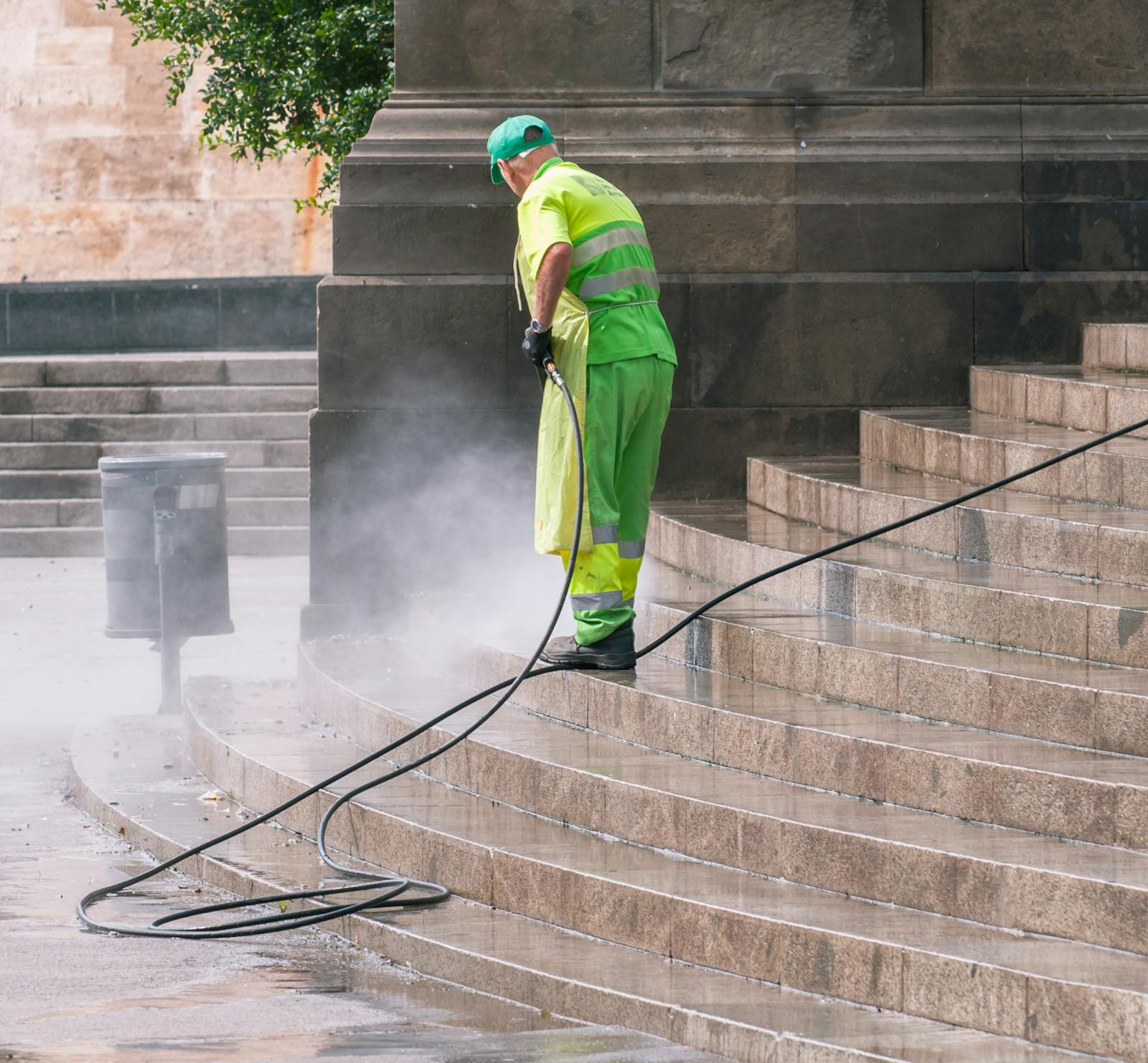
The first time one of our customers asked us why our wash lasted three times longer than their previous company's, we realized we didn't have a clean answer. We knew it worked. We knew our equipment was better. We knew our chemicals were better. But we'd never sat down and walked through the process step by step.
That conversation was the start of what we now call the CleanShield Method. It's the five-step process we use on every house, every time, and it's why homes we washed two years ago still look clean today while our competitors' customers are calling them back every spring.
This is the whole process. No secrets. If another company wants to copy it, we hope they do. Your house will be better off for it.
Step 1: Pre-Soak Protection
Before any chemistry touches your house, every plant within 15 feet gets soaked to root saturation with plain water.
This isn't a quick spray. We're talking three to five minutes of dedicated watering per shrub or flower bed. The goal is to get the root zone so fully hydrated that any chemical that touches the leaves later gets diluted instantly and carried away by the water already in the soil.
Most companies skip this step because it takes 20 to 30 minutes and the plants usually look fine afterward even without it. "Usually" is the problem. We've had three calls in 10 years from customers who lost a hedge or a flowerbed after a wash. Zero of them were ours.
The pre-soak is insurance. It takes 25 minutes and it's non-negotiable on every job.
Step 2: Seal and Shield
Before the chemistry goes on, we do a lap around your home and waterproof every electrical component.
That means:
- Tape and plastic over every outdoor electrical outlet
- Tape and plastic over every outdoor light fixture
- Covers on every HVAC unit that could be affected
- Door sweeps temporarily blocked if the wash zone is close to a threshold
This is another 10 to 15 minutes of prep that doesn't get done by most companies. The damage it prevents isn't always obvious the day of the wash. It's three weeks later when an outlet shorts out because water got behind the face plate and corroded the wiring.
Electrical damage is the highest-claim mistake in our industry. We've had zero in 10 years. This step is why.
Step 3: CleanShield Application
Now the chemistry goes on.
Our blend is sodium hypochlorite (the active ingredient in professional-grade bleach) mixed with a proprietary surfactant and cling agent package. It's applied from the bottom up using a downstream injector at low pressure, always low pressure, usually around 100 to 150 PSI.
The reason most washes don't last is because most companies are using the cheapest 12.5 percent sodium hypochlorite they can buy and applying it straight. It runs off the house before it has time to kill the algae. Ours has a cling agent that holds it on vertical surfaces long enough to actually do its job.
The bottom-up application matters too. Applying chemistry top-down causes streaking, because the detergent dries on the surface below before it's rinsed. Bottom-up keeps everything wet and even.
Step 4: Dwell and Dissolve
This is the step nobody wants to talk about, because it's the step that costs time and money.
After the chemistry goes on, we wait.
Depending on the condition of your siding, we wait anywhere from five to 15 minutes. During that time, the sodium hypochlorite is killing the algae, mildew, and mold at the cellular level. The surfactant is pulling the dead organic material away from the surface. The cling agent is keeping everything on the wall instead of on your driveway.
Most companies don't dwell. They apply chemistry and immediately rinse, because they have three other houses to do today. The result is a house that looks clean for two weeks before the surviving algae re-colonizes and the streaking comes back.
A 10-minute dwell on the CleanShield Method is the single biggest reason our results last. The algae is dead, not just hidden.
Step 5: Power Rinse
The final step is a rinse, and the rinse is where our equipment matters.
Most residential pressure washers move four gallons per minute. Ours move eight. That's twice the water volume per second, at half the PSI.
Why does that matter? Because a high-volume, low-pressure rinse pulls every trace of detergent off the surface without driving it further in. If you leave detergent residue behind, it attracts dust within 72 hours and your house looks dirty again a week after you paid to clean it. It also feeds a new cycle of algae growth if any of the chemistry ran off onto surfaces that didn't dwell long enough.
Our eight GPM rinse leaves zero residue. The surface is cleaned, dried, and ready to resist new growth for 12 to 24 months depending on your climate and your landscaping.
Why This Matters to You
The five steps above take 45 to 60 more minutes per house than what most competitors do. That's the main reason our quotes are higher.
If you've ever had a wash that was "clean for a week and dirty by month three," you weren't unlucky. You got a wash that skipped steps one, two, four, and most of five. The company made their margin by working faster. Your house paid the price.
When you hire us, you're paying for the 60 extra minutes. You're paying for the 10-minute dwell. You're paying for the eight GPM rinse unit. You're paying for the crew member who's been trained for 200 hours instead of 20.
Your wash is going to last. That's what you're actually buying.
If you want to see the process on your own house, book a free estimate. We'll walk you through exactly what we're going to do before we ever hold a wand.
See the CleanShield Method in Action
Book a free estimate and we'll walk you through exactly what we'll do on your home, step by step, before we start.
Keep Reading
What Your Pressure Washing Company Isn't Telling You
The pressure washing industry has almost no regulation, which means the quote you got for $200 might be the most expensive quote on your list. Here's what to ask before you hire anyone.
5 Signs Your Roof Is Secretly Destroying Your Home's Value
Those black streaks aren't just ugly. They're a living organism eating shingles and quietly knocking thousands off your property value. Here's how to spot it.
The Real Cost of Skipping Annual House Washing
An annual house wash runs $300 to $500. Skipping it for five years runs $8,000 to $30,000 in paint, siding, and property value. The math isn't close.